
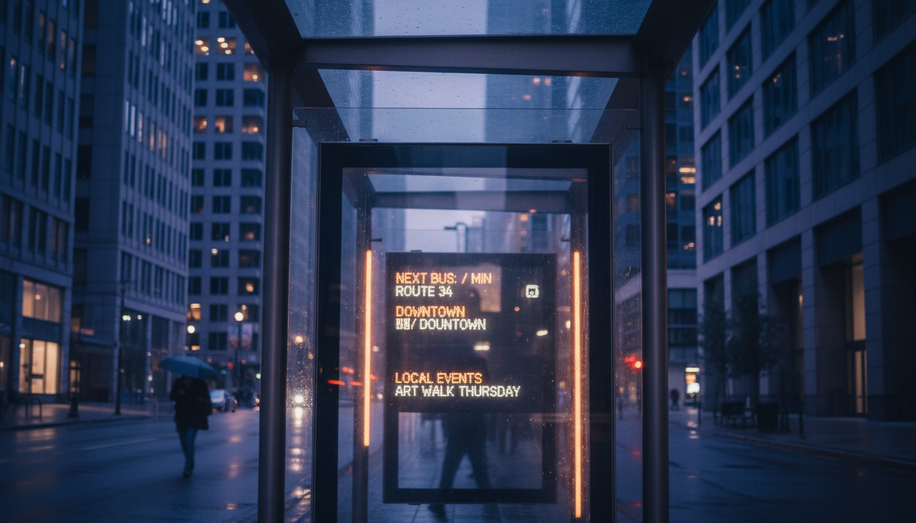

In the bustling arteries of modern cities, where pedestrians weave through crowds and commuters pause at transit points, street furniture advertising emerges as a subtle yet potent force. Far from the towering dominance of billboards, these unassuming formats—bus shelters, kiosks, benches, and more—embed brands directly into the daily rhythms of urban life, offering precision targeting that captures audiences in moments of natural dwell time.
Bus shelters stand as the cornerstone of this medium, transforming waiting areas into high-visibility canvases. Positioned along busy streets and near intersections, these structures draw eyes from both pedestrians and passing motorists, with ads displayed on eye-level panels that range from static posters to dynamic digital screens equipped with motion sensors. Commuters, often lingering for 10 to 15 minutes, provide a captive audience, allowing messages to sink in during otherwise idle moments. Some shelters now integrate interactive elements, such as QR codes that bridge the physical ad to digital engagement, fostering direct consumer interaction and boosting brand recall. This format’s strength lies in its ubiquity and dwell time, reaching daily riders who might otherwise scroll past online ads.
Benches extend this reach into more relaxed, community-oriented spaces. Printed panels on backrests or armrests appear in walkable neighborhoods, parks, schools, and shopping districts, targeting locals with a neighborhood-level intimacy. Unlike fleeting impressions from vehicles, bench ads engage both sitters and passersby, creating repeated exposure in high-footfall areas. For businesses like neighborhood restaurants or retailers, this hyper-local precision means advertising just blocks away from potential customers, turning proximity into impulse. Their affordability allows small and medium-sized enterprises to establish a physical presence without the budget strain of larger formats, while creative designs—such as directional cues pointing to nearby stores—add layers of utility and memorability.
Kiosks and newsstands amplify the interactive potential, blending information with promotion. These fixtures, often featuring lighted panels or digital displays, serve as navigational hubs in dense urban cores, drawing crowds for directions, newspapers, or quick checks. LinkNYC-style kiosks, for instance, combine free Wi-Fi with ad space, yielding high engagement as users interact with screens. Newsstands mirror bus shelters in their dwell-time appeal, captivating browsers amid morning rushes or evening commutes. Trash bins and bicycle racks push boundaries further: ads wrapping bins ensure constant visibility amid foot traffic, while bike rack panels align with eco-conscious crowds near universities and downtowns. Even street light poles and food cart toppers contribute, with banners fluttering for events or digital toppers hovering above outdoor diners.
What sets street furniture apart is its seamless integration into public amenities, managed through media vendors partnering with municipalities to rent prime spots. Advertisers select locations based on foot traffic data, demographics, or commuter patterns—placing near transit hubs for workers, retail zones for shoppers, or residential areas for locals. This yields maximum exposure in high-traffic zones, continuous visibility that outlasts digital scrolls, and targeted demographics without intrusion. Costs remain competitive, enabling campaigns across industries from B2B and healthcare to lifestyle and nonprofits, with options for static prints or data-driven digital swaps.
The advantages compound in urban precision. Hyper-local targeting allows a restaurant to dominate a single street corner or a retailer to saturate shopping districts, far surpassing billboards’ broad strokes. Continuous presence builds familiarity through repeated impressions, while creative activations—like motion-triggered messages or social-sharing prompts—spark conversations and selfies, enhancing vibrancy without overwhelming the cityscape. Digital iterations elevate this further, using live data for relevance, such as weather-tied promotions on shelters.
Yet street furniture’s true untapped potential lies in its evolution toward hybrid experiences. As cities densify and outdoor dining surges, formats like food cart toppers capture lines of eager eaters, blending ads into lifestyle moments. Bike shares and trash bins tap sustainability trends, resonating with active demographics. For global brands, scalability across markets—from New York to Los Angeles—means consistent messaging with localized flair. Small businesses gain an edge through personalization, like sequential kiosks guiding to stores.
In an era of ad fatigue, street furniture advertising reclaims attention by inhabiting the environment rather than shouting over it. It connects brands to urban pulses—commuters pausing, shoppers lingering, residents relaxing—delivering measurable impact through visibility, engagement, and precision. As municipalities expand public amenities, this medium stands ready to redefine out-of-home strategies, proving that the smallest surfaces hold the city’s biggest opportunities.