
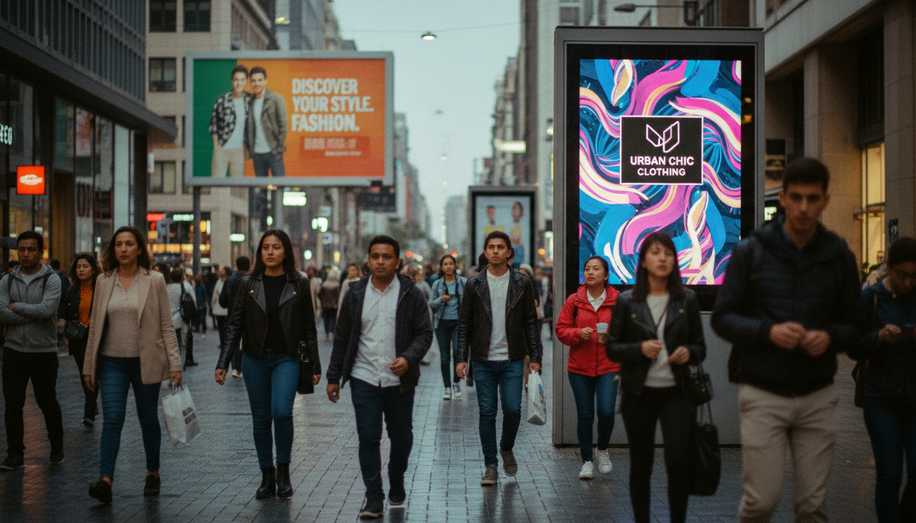

In an era where digital distractions dominate, brick-and-mortar retailers are rediscovering the pull of out-of-home (OOH) advertising to lure shoppers through their doors. With consumers increasingly blending online browsing and in-person purchases, OOH serves as a potent last-mile connector, delivering hyper-local messages that prompt immediate action. Research underscores its effectiveness: 59% of shoppers are likely to make a purchase within 30 minutes of encountering an OOH ad, while 42% report that such exposure directly influences their in-store decisions.
Proximity targeting stands at the forefront of these strategies, harnessing geo-fencing to deliver tailored promotions precisely when consumers are nearest to a store. By defining a virtual perimeter around retail locations, advertisers can trigger digital OOH displays on billboards, transit screens, or mall panels as shoppers approach, showcasing real-time deals like “20% off today only—two blocks ahead.” This reduces purchase friction, turning passive passersby into deliberate visitors. For instance, campaigns in high-traffic retail corridors can highlight stock availability or curbside pickup, capitalizing on the 56% of shoppers who buy featured items after seeing DOOH displays, 65% of those impulsively. Retailers targeting bargain hunters, such as those aged 55-64 frequenting malls, amplify this by promoting limited-time loyalty incentives on nearby screens, fostering a sense of urgency that drives detours.
Directional messaging elevates proximity tactics by providing clear, navigational cues that guide consumers straight to the storefront. Simple yet bold visuals—”Your left at the next light for exclusive savings”—on bus shelters, highway billboards, or urban panels cut through commuting clutter, especially in environments demanding quick comprehension, like rush-hour drives where messages must distill to seven words and a striking image. Localizing these directives with familiar landmarks or neighborhood pride enhances resonance; a coffee shop chain might proclaim “Fresh brews at Elm Street—1 minute away!” to tap into daily routines. In long-dwell spots such as transit hubs, where audiences linger 5-15 minutes, more elaborate directions pair with interactive elements like QR codes linking to maps or store hours, boosting the 76% mobile response rate from digital OOH encounters. Geo-conquesting takes this further, intercepting rivals’ customers with “Better deals this way” arrows pointing to your location, a proven method to siphon foot traffic using precise location data.
Event-based promotions fuse OOH with real-world happenings to create irresistible draw. Timing messages around local festivals, sports games, or community gatherings transforms screens into event amplifiers, such as “Post-game specials waiting at our door—scan for directions.” Sponsoring nearby events allows retailers to erect temporary displays or partner with venues, handing out flyers or showcasing products in complementary shop windows for extended dwell time and on-the-spot sales. Weather targeting adds precision, activating sunny-day beachwear ads near coastal stores or rainy-day umbrella deals during storms, aligning with shopper mindsets for heightened relevance. Seasonal alignments, like holiday gift guides on urban panels or back-to-school urgencies in transit, precondition audiences already primed to buy, while Gen Z-focused campaigns in social venues weave in QR-driven interactivity tied to sustainability themes.
Beyond deployment, success hinges on seamless integration of online and offline elements. Embedding QR codes, custom promo codes, or hashtags in OOH creatives tracks engagement, revealing how many scan-to-visit or redeem in-store discounts. Retailers like Denny’s have seen 12% of exposed audiences pledge store visits within weeks via loyalty-tied messaging. Placement variety—gas station pumps for drivers, café boards for lingerers, arenas for crowds—ensures contextual fit, with digital flexibility allowing real-time swaps for stock updates or flash sales. Low-cost options like remnant digital billboards near the store keep barriers low for independents, while collaborations with adjacent businesses extend reach without premium spends.
Measurement solidifies OOH’s ROI, employing mobile location data to link ad exposure to store footfall, sales lift studies for revenue spikes, and brand lift metrics for intent shifts. This closed-loop feedback refines future efforts, proving OOH’s role in omnichannel ecosystems where 75% of in-store shoppers still recall roadside prompts.
For brick-and-mortar survivors, OOH isn’t relic—it’s revival. By wielding proximity precision, directional clarity, and event synergy, retailers convert ambient attention into aisle traffic, bridging digital awareness with physical conversions in ways algorithms alone cannot match. In crowded markets, these tactics don’t just advertise; they orchestrate arrivals.