
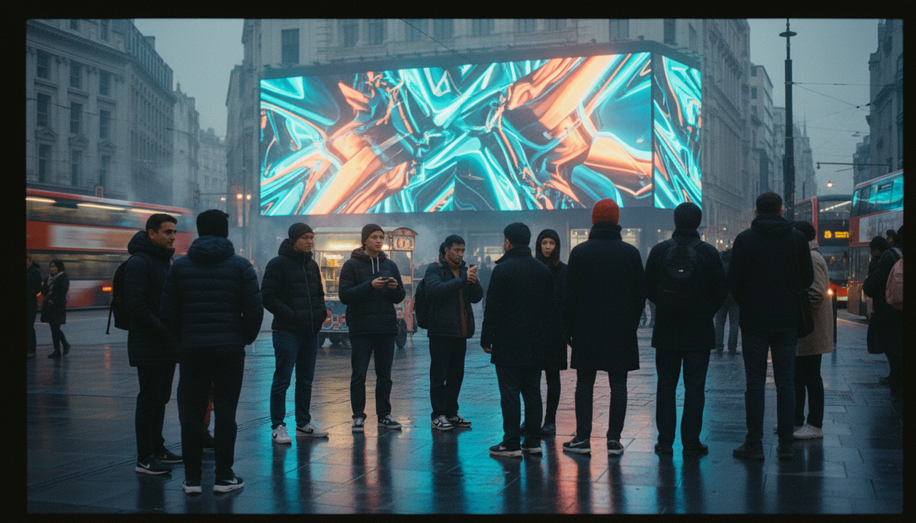

In the bustling heart of urban landscapes, out-of-home (OOH) advertising is shedding its skin as mere commercial signage to emerge as a vibrant canvas for public art. Large-scale installations and immersive campaigns are redefining cityscapes, turning billboards, panels, and public plazas into interactive spectacles that draw crowds, ignite conversations, and linger in collective memory far beyond a brand’s sales pitch. These experiential touchpoints prove that OOH can transcend traditional messaging, blending commerce with creativity to foster authentic community connections.
Consider the transformative power of outdoor art installations as brand touchpoints. Unlike static billboards that blend into the urban noise, these bold structures invite passersby to pause, touch, and engage. Brands collaborating with local artists create pieces that reflect cultural narratives, sparking emotional ties and trust among viewers, particularly younger generations craving genuineness over glossy endorsements. Studies reveal that 73% of consumers favor brands employing such creative strategies, with 41% snapping photos for social media and 32% delving deeper into the brand’s mission afterward. This organic amplification extends reach exponentially, turning a single installation into a viral phenomenon that fuels online buzz and street-level excitement.
JCDecaux exemplifies this evolution, positioning OOH as the ultimate public art gallery. In Guatemala City, for over 13 years, the company has partnered with the Rozas-Botrán Foundation to display local artists’ works on advertising panels, converting the metropolis into an open-air exhibition. Similarly, Paris’s iconic Morris columns—dating back to 1868—have long showcased masterpieces, upholding a legacy of cultural accessibility. These initiatives demonstrate OOH’s capacity to democratize art, making high-caliber creativity free and omnipresent in everyday commutes.
Immersive temporary installations take this concept further, crafting unforgettable public attractions. Yuri Suzuki’s *Sonic Bloom* in London (2021) features oversized, flower-like sculptures that visitors activate to compose music, weaving personal soundscapes amid a Dr. Seuss-inspired field. In Montreal, CS Design and Lateral Office’s *Impulse* (2015) lit up a winter plaza with LED-equipped seesaws that chimed with motion, morphing a mundane space into a symphony of light and play. Olafur Eliasson’s artificial waterfalls along New York’s East River cascaded from urban scaffolding, merging nature’s drama with city grit to provoke wonder about humanity’s place in the built environment. These ephemeral works thrive on interactivity and surprise, prompting participants to question perceptions of space—much like Daniel Buren’s *Colonnes de Buren* in Paris, with its 260 striped columns challenging symmetry and scale.
Billboards themselves have become artistic billboards-in-reverse, hosting provocative expressions that blur advertising and fine art. Los Angeles’s TBC initiative since 2014 has spotlighted contemporary artists like Cadila Rawles and Ramiro Gomez on digital displays, injecting introspective narratives into traffic flows and elevating the urban visual diet. In New York’s SoHo, Shaquille Aron Keith’s “Diesel is Dead” campaign for the brand Diesel provoked instant reactions with its stark messaging, teasing curiosity and driving inquiries through sheer audacity. Michigan’s “Art in the City” project, a collaboration with the Arts Council and Adams Outdoor Advertising, juried local talents onto billboards, celebrating regional creators while drawing residents and tourists alike.
Such campaigns often evolve into enduring public landmarks. Alexander Calder’s *Flamingo* stabile, unveiled in Chicago’s Federal Plaza in 1974, stands as a scarlet beacon of abstract joy, emblematic of how OOH-integrated art anchors civic identity. Worldwide, Invader’s unauthorized *Space Invaders* mosaics—pixelated aliens infiltrating 79 cities since 1998—remind us that street-level interventions make art accessible beyond elite galleries. Even playful pieces like Jean Jullien’s *Filili Viridi* in Nantes (2021), where whimsical sculptures lounge amid Jardin des Plantes, or Auckland’s *Rainbow Machine* (2012), offering private prismatic visions in public silos, underscore OOH’s versatility in sparking intimate joy within communal realms.
The ripple effects are profound. These installations not only boost brand recall but also revitalize public spaces, encouraging tourism, dialogue, and even social change. They combat ad fatigue by prioritizing storytelling over sales, fostering shared experiences that resonate culturally and emotionally. As cities densify, OOH’s future lies in this hybrid realm—where commerce funds art that delights, surprises, and unites. Marketers investing here build legacies, proving that the most memorable campaigns are those that make the street a stage, the billboard a masterpiece, and the city a living gallery.
As OOH embraces its role as a living gallery, measuring the profound ripple effects of public art and immersive installations becomes paramount. Blindspot offers the critical audience measurement and ROI attribution tools needed to track social amplification, community engagement, and brand recall, ensuring artistic campaigns translate into measurable legacies. Marketers can leverage location intelligence to optimize impact, turning every street into a data-driven stage for compelling brand narratives. https://seeblindspot.com/