
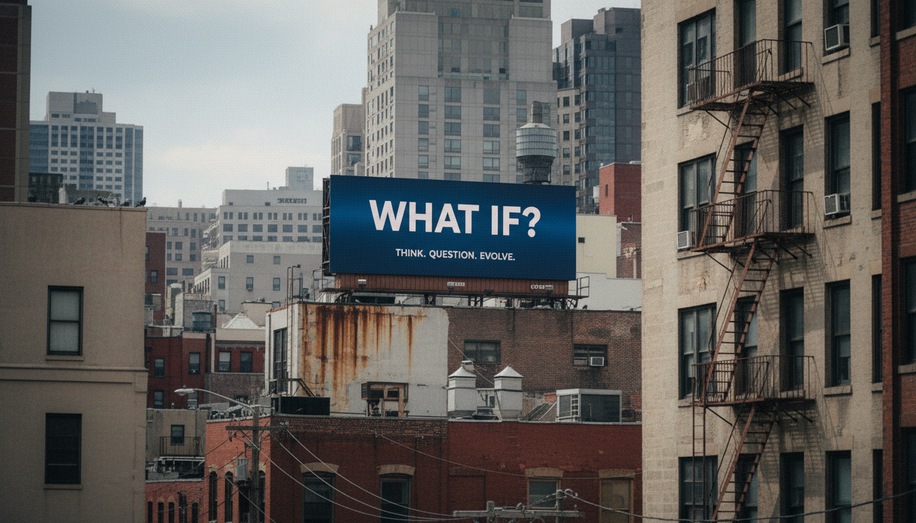

In the fleeting seven seconds a driver has to absorb a billboard, crafting a narrative boils down to mastery: ten words that hook, build, and resolve a brand story. This extreme brevity transforms out-of-home (OOH) advertising from mere visibility into unforgettable emotional journeys, leveraging human psychology to forge lasting connections. Sequential storytelling across multiple boards or digital rotations amplifies this power, turning isolated glances into a cohesive saga that commuters unconsciously follow.
Consider the constraints: vast canvases demand simplicity, bold visuals, and messages readable at 60 miles per hour. Yet within these limits lies opportunity. Techniques like the “hero’s journey”—adapted from ancient narrative structures—position the audience as protagonists facing a problem, with the brand as the guide to triumph. A coffee chain might deploy three sequential billboards: first, a weary driver with “Running on empty?”; second, a steaming pour intoning “We can fix that.”; third, the logo proclaiming “Wake up with Daily Grind.” Each panel stands alone yet advances the arc, exploiting repetition with variation to combat creative fatigue and boost recall.
Emotional resonance elevates these micro-stories. Billboards thrive on evoking empathy, nostalgia, or curiosity rather than dry facts, as emotions trigger the brain’s memory centers more effectively than statistics. Global advertisers have long harnessed this, designing boards that spark joy or outrage to inspire social shares—think a nostalgic family reunion image paired with “Home is calling. Book now.”—prompting photos that extend the story virally. Color psychology reinforces this: warm reds for urgency in a fast-food call-to-action, cool blues for trust in a bank’s reliability narrative. Simplicity reigns; clutter kills comprehension, so visuals dominate—striking imagery with hierarchy: largest font for the hook, subordinate for the twist.
Digital OOH revolutionizes this art, enabling dynamic sequences that evolve by time, weather, or data. A concert promoter rotates “Something Big Is Coming,” “Guess Who’s Back,” and “Tickets On Sale Now,” creating anticipation across a drive. Augmented reality (AR) layers narratives further: scan a cosmetic brand’s board to “help” a virtual character apply makeup, personalizing the story via user interaction. AI-driven personalization tailors content in real-time—predicting commuter preferences from traffic data—while ethical data use ensures relevance without intrusion. These tools make every second count, as shrinking attention spans demand hooks like “in media res”: plunging viewers mid-action, such as a half-eaten burger mid-bite with “Hungry yet?” to ignite curiosity instantly.
Crafting such tales begins with audience personas—detailed profiles of drivers’ pain points, desires, and routines. A HVAC firm targeting Oklahoma summers maps the seasonal hero’s journey: spring’s “Stay Cool This Summer,” mid-season’s “Heat? We’ve Got You Covered,” fall’s “Time to Warm Up.” Authenticity humanizes the brand; weave origin stories or customer triumphs into ten words, like “From our farm to your rush hour—fresh every drive,” fostering loyalty through relatability. Test rigorously: ensure readability at distance, emotional pull via focus groups, and standalone strength per panel.
Sequential design demands a visual thread—consistent colors, fonts, motifs—while injecting novelty to sustain engagement. Avoid overselling; the best narratives tease, leaving viewers primed via QR codes or URLs for the full epilogue online. This prologue approach extends dwell time beyond the highway, blending OOH with digital ecosystems for hybrid impact.
Ultimately, ten-word narratives master OOH by mirroring life’s vignettes: concise, evocative, sequential. Brands like those evolving messages seasonally don’t just advertise—they inhabit commutes, building recognition into loyalty. In an era of digital billboards and AI precision, storytelling isn’t optional; it’s the smartest path to turning passive passersby into devoted followers. As technology advances, those who distill epic tales into highway haikus will dominate the skyline.