
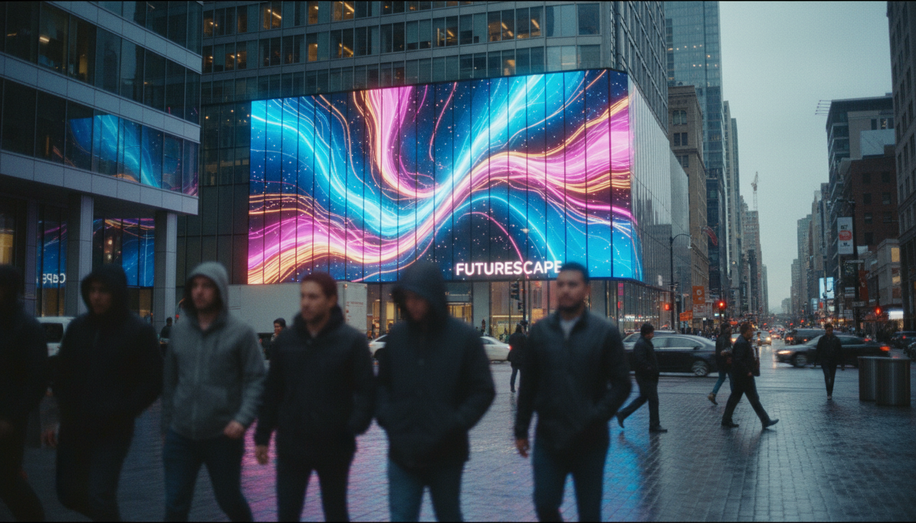

In cities worldwide, public-private partnerships (PPPs) harnessing outdoor advertising are transforming urban landscapes, funding everything from bus shelters to streetlights while generating revenue for cash-strapped municipalities and visibility for brands. These collaborations, often born from neoliberal shifts in urban governance, allow private outdoor media companies to finance and maintain public infrastructure in exchange for exclusive advertising rights, creating a win-win where cities upgrade amenities without dipping deeply into taxpayer funds, and advertisers tap into high-traffic, always-on displays.
Take the proliferation of advertising-funded street furniture: companies like JCDecaux, operating under the Adshel banner, manage over 3,500 municipal contracts across 35 countries, installing and upkeep bus shelters, street signs, and public telephones. In these deals, the private partner covers all costs—from design and construction to ongoing maintenance—while selling ad space to third-party brands. New York City’s Metropolitan Transportation Authority, for instance, has sold advertising on subway car exteriors and turnstiles, channeling proceeds back into transit improvements. Similarly, in Nairobi, a company partners with the City Council to auction ad space on streetlamps along public roads, enabling firms to “adopt” highways and fund repairs or enhancements. This model echoes broader trends, where outdoor firms strike exclusive agreements with urban authorities, monetizing “media space” through audience metrics and prime locations to attract advertisers.
The economic mechanics are straightforward yet powerful. Outdoor advertising thrives on its ability to command premium rates based on footfall, dwell time, and visibility—metrics increasingly refined by data analytics. For municipalities facing budget constraints, these PPPs offer immediate infrastructure boosts without upfront capital. A World Bank analysis highlights how ad revenue from spaces around infrastructure projects—like transit hubs or parks—captures commercial value, funding operations in sectors from transport to utilities. In the U.S., Florida’s Outdoor Advertising (ODA) program, enforced via partnerships with firms like WGI, uses lidar technology to ensure compliant billboards along highways, balancing revenue generation with scenic preservation under the Highway Beautification Act. This not only sustains ad-funded maintenance but enhances roadway aesthetics, indirectly supporting tourism and local economies.
Brands, meanwhile, gain unparalleled reach. Imagine a KFC campaign in Kentucky, where the chain repaired potholes and branded the fresh asphalt with “refreshed by KFC,” merging corporate goodwill with hyper-local exposure. Or consider mixed-use developments where outdoor media firms collaborate with private developers to create “centers of excitement” amid retail and entertainment hubs, amplifying brand immersion. These partnerships extend to smart city initiatives, where private investment in IoT sensors for traffic or waste management is offset by ad-clad infrastructure, fostering sustainable urban efficiency.
Yet, not all views are glowing. Critics argue these arrangements risk monopolizing the outdoor media landscape, sidelining diverse voices in favor of corporate messages and eroding the public realm’s accessibility. As one analysis notes, neoliberal governance prioritizes entrepreneurialism over managerial equity, potentially prioritizing profit-driven designs that homogenize cityscapes. Cities like Auckland and São Paulo have faced backlash over ad-saturated streetscapes, prompting calls for “democratization” strategies—such as community input on ad content, revenue-sharing mandates, or caps on exclusive deals—to preserve pluralism without banning OOH outright.
Despite concerns, success stories abound. The CityArchRiver project in St. Louis exemplifies PPPs’ broader impact, blending private funding for parks and museums with economic ripple effects: new jobs, business influx, and resident attraction. Globally, from Europe’s street furniture networks to Asia’s urban transport upgrades, these models prove resilient, adapting to regulations while delivering mutual gains. In India, PPP frameworks for urban infrastructure emphasize competitive bidding for transaction advisers, ensuring transparent ad-funded projects in roads and public spaces.
Looking ahead, technology will amplify these partnerships. Lidar and geospatial tools, as deployed by WGI in Florida, enable precise compliance monitoring, paving the way for digital OOH integrations like dynamic screens tied to real-time data. Smart city rollouts could see ad revenue subsidizing energy-efficient lighting or EV charging stations, aligning brand marketing with green goals. For advertisers, this means measurable ROI through geo-targeted campaigns; for cities, diversified revenue streams amid fiscal pressures.
Ultimately, OOH PPPs represent a pragmatic evolution in urban financing, where billboards and benches become engines of progress. By negotiating balanced terms—strong oversight, inclusive design, and shared revenues—municipalities and brands can sustain thriving cities that benefit all stakeholders. As urban populations swell and budgets tighten, these collaborations offer a blueprint for infrastructure that pays for itself, one ad at a time.