
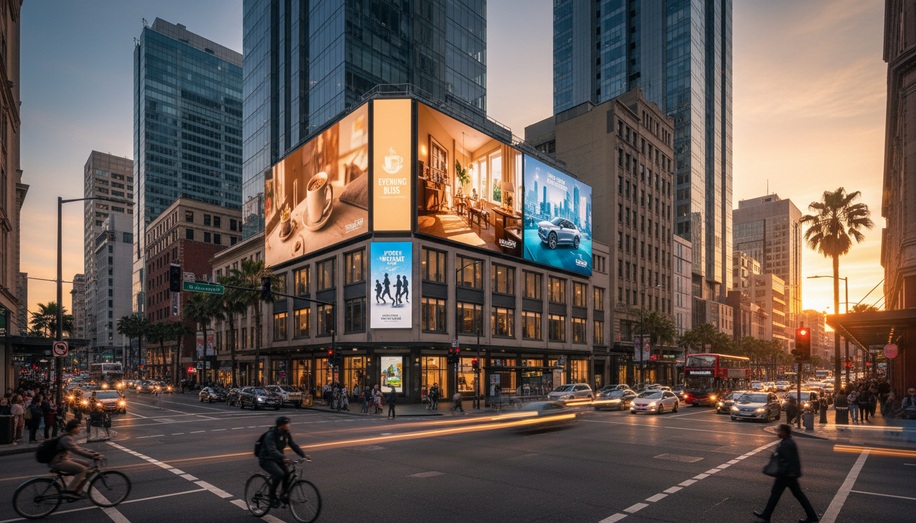

Programmatic advertising has long been plagued by brand safety concerns, with advertisers fearing their messages will appear alongside inappropriate or harmful content. Yet digital out-of-home (DOOH) is emerging as a powerful antidote to these challenges, offering advertisers unprecedented control over placement environments while delivering contextually relevant messages to precisely targeted audiences.
The stakes for brand safety have never been higher. According to industry research, brand safety ranks as the top concern for programmatic buyers today, with the specter of reputational damage driving advertisers to seek environments where their messaging can be delivered with confidence. Unlike traditional digital platforms where ads can surface in unpredictable contexts—from extremist content to illegal material—DOOH provides a fundamentally different value proposition: complete oversight of ad placement in controlled physical environments.
This control stems from the unique nature of programmatic DOOH infrastructure. Automated creative approval processes ensure that all ads placed on digital screens in public spaces comply with local guidelines and brand safety standards before deployment. When a beverage brand places an ad on a roadside billboard or a retail advertisement appears on a digital screen in a shopping district, that placement occurs within a vetted, brand-safe context. There are no algorithmic surprises, no controversial adjacent content, no unexpected associations that could undermine brand equity.
Beyond baseline safety, programmatic DOOH delivers contextual relevance that resonates with audience mindset at the moment of exposure. Geotargeting capabilities allow brands to tailor messages to specific locations and demographics, ensuring that ad content aligns with the immediate environment and audience composition. A fitness brand might deliver motivational messaging near a gym; a restaurant chain can time location-specific offers during peak dining hours; a luxury retailer can target affluent neighborhoods with premium product placements. This alignment between message, environment, and audience creates a coherence that strengthens campaign effectiveness while maintaining brand safety.
The technology layer supporting these capabilities has matured considerably. Real-time reporting and forecasting tools enable continuous optimization of campaigns, maximizing return on investment while providing transparency into where and how budgets are deployed. Advertisers gain visibility into impression-level data, supply chain paths, and contextual performance metrics—eliminating the opacity that has plagued programmatic buying in digital channels.
The privacy dimension adds another layer of advantage. As the advertising industry transitions away from cookie-based targeting toward contextual approaches, programmatic DOOH leverages contextual data that respects user privacy while enabling ethical and effective campaigns. This shift addresses growing consumer concerns about surveillance while maintaining campaign precision, positioning DOOH as an increasingly attractive channel for privacy-conscious brands.
Perhaps most compellingly, programmatic DOOH integrates seamlessly into broader media strategies. When combined with television and online video through unified digital advertising platforms, DOOH amplifies brand presence across multiple channels while maintaining consistent messaging and safety standards. This cross-media integration produces an incremental impact that isolated digital channels cannot achieve, allowing brands to construct cohesive experiences across the entire customer touchpoint landscape.
The industry has also responded to earlier challenges with enhanced governance structures. Where brand safety previously relied on centralized oversight, responsibility now falls on individual platforms, ad tech companies, and brands themselves to implement protective measures. This distributed accountability has actually strengthened outcomes, as supply path optimization, transparent inventory sources, and accredited fraud detection have become baseline expectations rather than optional features.
As advertisers continue navigating an increasingly complex media environment, programmatic DOOH represents a convergence of control, relevance, and safety. By enabling precise audience targeting in verified environments, this channel allows brands to deliver contextually appropriate messages with confidence that their reputations remain protected. In an era when a single misplaced ad can generate social media backlash and brand damage, that assurance has become invaluable.
For brands navigating these brand safety imperatives, platforms like Blindspot offer an indispensable layer of assurance. Leveraging programmatic DOOH campaign management and sophisticated location intelligence, advertisers gain precise control over ad placement in verified, contextually appropriate environments, effectively eliminating the risk of unexpected associations or misplacement. This empowers brands to confidently deliver targeted messages, ensuring both campaign effectiveness and inviolable brand reputation, discover more at https://seeblindspot.com/