
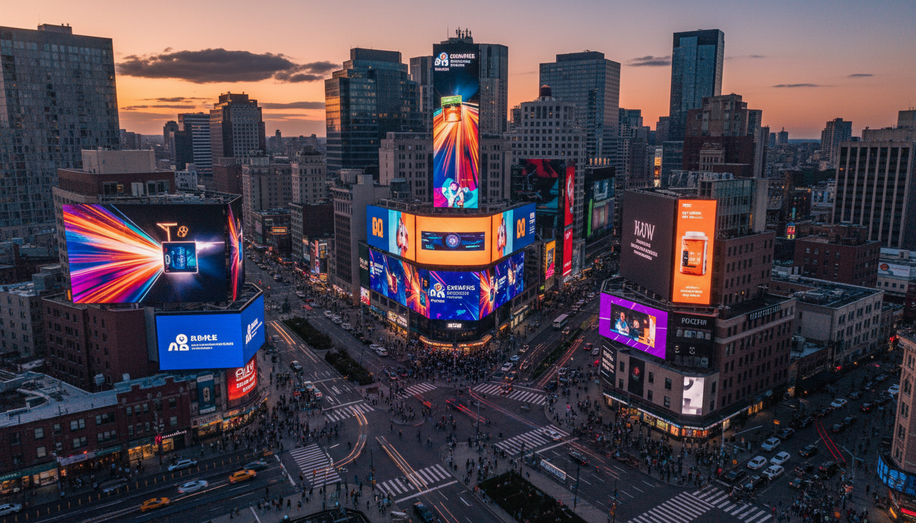

In the high-stakes world of out-of-home (OOH) advertising, collaboration has emerged as a potent strategy for brands to stretch budgets, amplify reach, and tap into complementary audiences. By sharing billboard space, transit wraps, or digital displays, partners co-promote messages that resonate more deeply than solo efforts, turning static inventory into dynamic storytelling platforms. This “power of two” approach not only cuts costs but fosters creative synergies, as seen in campaigns where unlikely bedfellows leverage each other’s strengths to drive measurable impact.
One standout example unfolded in 2019 when Burger King and Guinness, through innovative OOH executions, indirectly showcased the potential for cross-brand inspiration in shared media environments. Burger King’s “weather-targeted” billboards, which dynamically promoted Whopper meals to nearby McDonald’s drive-thru visitors on rainy days, earned a Grand Prix at Cannes Lions for boosting foot traffic and sales. While not a direct partnership, the campaign’s success highlighted how real-time OOH adaptations could inform collaborative models. Fernando Machado, then Burger King’s Global CMO, noted it transformed traditional OOH into a “powerful conversion tool.” Imagine if Guinness had co-opted adjacent space with its own weather-responsive ads—adjusting messages to lure pub-goers during downpours—which spiked visits and engagement by syncing with local conditions. Such proximity in OOH landscapes demonstrates how brands can amplify each other without formal ties, sharing audience attention and environmental triggers.
Formal partnerships take this further, as evidenced by YETI’s expansive ambassador network, which evolved into cross-promotional OOH opportunities with outdoor lifestyle brands. Starting with fishing and hunting communities in 2006, YETI scaled to 15 groups by 2023, including rodeo and skate culture, using influencers to blend product stories with real-world adventures. This model extended to OOH when YETI collaborated with destinations like Panama City Beach in a Watauga Group-led InstaMeet. Ten influencers descended on the Florida shores, creating custom travel itineraries and live social chats that cross-promoted YETI gear alongside beach experiences. Billboards and transit ads featured user-generated content from these events, merging YETI’s rugged imagery with the destination’s vibrant visuals. The result? Boosted visibility for both, with influencers’ posts driving traffic to YETI’s outdoor ethos while funneling tourists to Panama City Beach, proving shared OOH spaces can cultivate authentic, lifestyle-driven narratives.
Transit environments offer another fertile ground for co-promotions, where brands layer messages to capture commuters’ fleeting attention. Glossier, the beauty disruptor born online, partnered with Sephora for street-level OOH in New York City, blanketing MTA buses and high-traffic billboards with co-branded creatives announcing in-store availability. Zenni Optical, outselling Warby Parker yet lagging in awareness, saturated those same bus sides with bold, frequency-focused ads that complemented Glossier’s pastel aesthetics. Though not a single joint buy, the overlapping coverage created a de facto partnership effect, reaching urban professionals and shoppers in tandem. Zenni’s play prioritized sheer reach across all depots, while Glossier informed consumers of physical retail touchpoints—combining for heightened brand recall during daily commutes. This shared inventory approach slashed individual costs while exposing each to the other’s audience, turning buses into rolling billboards of mutual endorsement.
Dove Men+Care Deodorants provides a textbook case of multi-channel OOH collaboration with transit partners in New York City. Teaming with OUTFRONT Media, the campaign integrated billboards, mobile units, transit wraps, and digital displays to target male commuters. By co-promoting with urban mobility brands, Dove amplified its “Care for Your Skin” message, blending product benefits with city life rhythms. Results included lifted awareness and sales lifts, as the partnership extended OOH’s footprint beyond static sites into motion. Similarly, InterContinental Hotels Group leveraged mobile, social-tied OOH in the same market, partnering with transit operators for geo-fenced promotions that funneled travelers from airports to bookings. These efforts underscore cost-sharing’s appeal: hotels gain precise audience reach, while OOH providers unlock premium co-sponsorship revenue.
Even museums and startups have harnessed partnerships to punch above their weight. The Deep Time/Fossil Hall campaign at a DC museum used kid-drawn dinosaurs on billboards targeting families, co-promoted with local family brands to drive attendance post-pandemic. Pyara Salon, relocating after a decade, shared OOH space with complementary lifestyle advertisers to alert patrons, blending salon imagery with neighborhood narratives for rapid awareness. Kansas City Public Schools (KCPS) combined billboards and mobile ads with education partners, multiplying messages to recruit and retain students.
These cases reveal collaboration’s core advantages: cost efficiency through split media buys, expanded audiences via audience overlap, and enhanced creativity from merged storytelling. In an era of fragmented media, OOH partnerships like YETI’s influencer-destination tie-ups or Dove’s transit synergies deliver unskippable impact, with data showing sales uplifts, engagement spikes, and loyalty gains. As inventory tightens and targeting sharpens, expect more brands to embrace the power of two, transforming OOH from monologue to dialogue. The lesson is clear: in shared spaces, two voices often echo louder than one.