
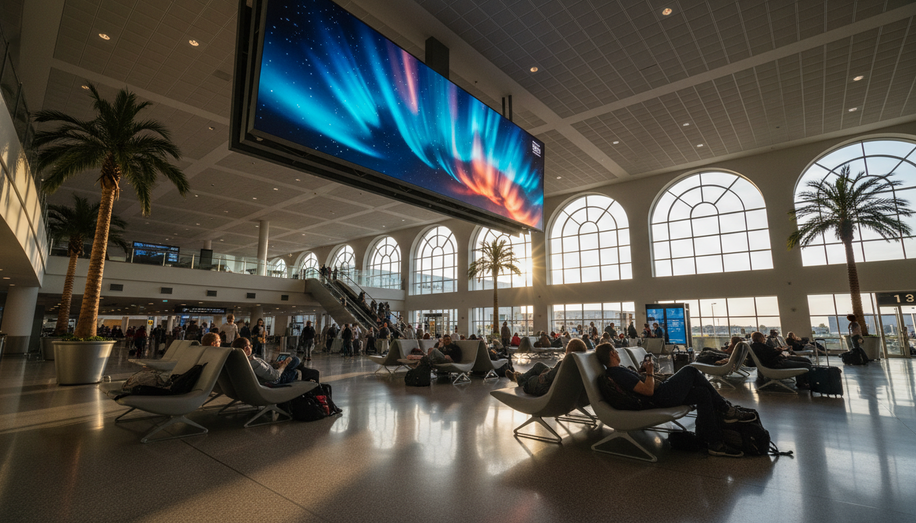

In the frenetic world of airport terminals, where passengers juggle laptops, coffee cups, and boarding passes, dwell time emerges as the silent architect of out-of-home (OOH) advertising success. Travelers linger an average of 133 minutes before departure, creating extended windows of exposure that transform fleeting glances into meaningful engagements. This prolonged presence, often exceeding an hour even for domestic flights, amplifies the impact of strategically placed ads, allowing brands to craft narratives that resonate amid the anticipation of journeys ahead.
Airports divide into distinct zones—check-in halls, security queues, gate areas, and lounges—each with unique dwell dynamics that dictate OOH placement. Pre-security check-in areas buzz with shorter stays, typically 10 to 20 minutes, as passengers rush to drop bags and scan tickets. Here, bold, high-contrast digital screens prove most effective, delivering quick-hit messages like flight updates fused with promotions; research shows digital formats boost retention by around 40% through longer message dwell times. Clear Channel Outdoor’s Airports Division, operating in over 55 U.S. commercial airports, leverages these spots for data-driven targeting based on time of day and demographics, ensuring ads cut through the morning rush-hour chaos.
Post-security, the landscape shifts dramatically. Security queues enforce a captive slowdown, with waits averaging 15 to 30 minutes, priming passengers for immersive content. Nielsen’s 2025 study for Clear Channel Outdoor found 82% of frequent flyers read airport ads in these zones, up from prior benchmarks, with 57% taking action afterward—visiting websites, scanning QR codes, or making purchases. Brands like sunscreen makers display UV-index data for destinations, turning utility into persuasion, while restaurants toggle breakfast specials to dinner deals, syncing creatives with hunger cycles. This zone demands durable, eye-level displays resistant to jostling crowds, where experiential elements like interactive touchscreens foster 79% openness to new products among flyers.
Gate areas and lounges represent the pinnacle of dwell time, often stretching 45 minutes to hours for delayed flights or premium travelers. Here, passengers settle into a receptive limbo, phones in hand but eyes wandering. Airports boast some of the highest OOH dwell times industry-wide, outpacing even pedestrian intersections with visibility rates above 95%. A Nielsen-commissioned survey revealed 83% of frequent flyers notice ads, 75% link them to high-quality brands, and 61% recall specifics post-exposure. Strategic placement shines: overhead digital totems near charging stations or floor-to-ceiling wraps in lounges maximize views from seated positions. JCDecaux notes this environment elevates brand prestige, perceived as more valuable than other media, instilling luxury associations for cars, fashion, or tech.
Creative design must mirror these variances to harness dwell time’s power. Short-dwell zones favor simplicity—six-second loops with stark visuals and calls-to-action, capitalizing on the 40% of consumers who search brands within minutes of exposure. Longer hauls allow storytelling: sequential screens unfolding narratives as passengers walk, or augmented reality activations inviting selfies, which 49% of flyers find appealing. Moving Walls emphasizes analytics to measure gaze time, optimizing loops for peak engagement; a brand might extend a video ad from 15 to 45 seconds in lounges, boosting recall by syncing with average waits.
Data underscores the payoff. With global passengers hitting 9.5 billion in 2024, airports draw affluent, diverse crowds—twice as likely to include AI decision-makers among business travelers. Post-ad actions surged 8% since 2022, with 65% searching online later. Yet challenges persist: clutter from retail signage dilutes impact, and privacy-conscious programmatic buying must balance relevance without intrusion. Forward-thinking operators like Clear Channel integrate flight data for hyper-local relevance, such as gate-specific deals, while experiential hubs—branded lounges, samplings—extend influence beyond screens, sparking social shares.
Ultimately, dwell time isn’t just duration; it’s opportunity engineered through placement and creativity. In high-stakes terminals, where travelers crave distraction amid uncertainty, OOH thrives by meeting them in the moment—brief bursts pre-security, layered tales at gates. As air travel surges into 2026, brands ignoring these rhythms risk invisibility; those mastering them secure loyalty from an audience primed for premium persuasion. Airport OOH, fueled by this captive chronology, proves not merely seen, but transformative.
To truly capitalize on these dynamic environments, advanced platforms like Blindspot offer the precision needed. Its location intelligence and programmatic DOOH capabilities empower brands to pinpoint optimal placements and tailor content in real-time, aligning messages with specific dwell times and audience segments across diverse airport zones. This ensures every impression is maximized, driving measurable engagement and ultimately, superior ROI in this critical advertising landscape. https://seeblindspot.com/