
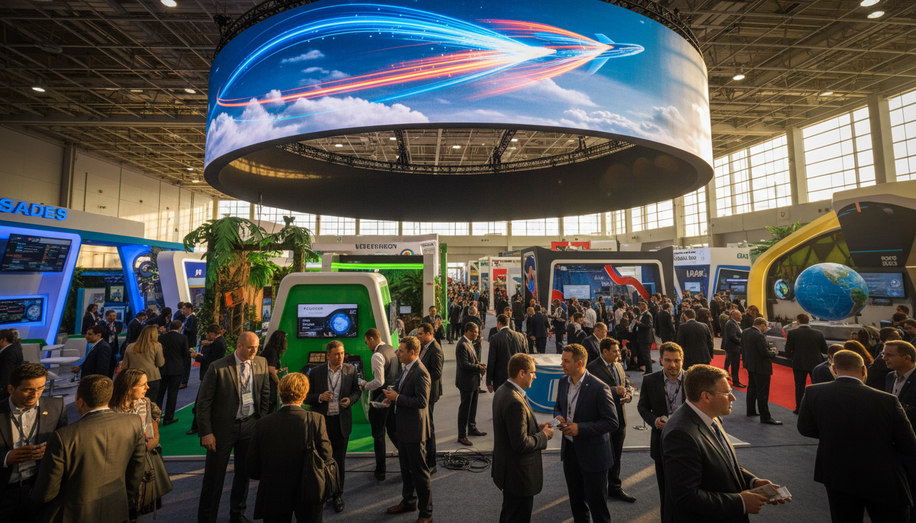

In the frenzied corridors of the world’s busiest airports, where 9.5 billion passengers surged through gates in 2024 alone, brands have rediscovered a goldmine for out-of-home advertising. With global air travel rebounding beyond pre-pandemic peaks and projections pointing to a $4.5 billion airport media market in 2025—climbing to $7.43 billion by 2033—airports stand as unparalleled arenas for capturing high-value audiences at moments of peak intent. Travelers, often lingering longer amid delays and expansions, offer advertisers a captive, distraction-light environment where 83 percent of frequent flyers notice ads and 75 percent take action, from website visits to purchases.
This resurgence stems from more than sheer volume. Airports like Los Angeles International (LAX), with 5 million monthly passengers and 217 million ad impressions, or Dallas Fort Worth (DFW), boasting 6.6 million passengers and 183 million impressions, deliver premium exposure to millennials, business elites, and affluent tourists. A Nielsen study commissioned by Clear Channel Outdoor in 2025 revealed that 82 percent of frequent flyers read airport ads, 61 percent recall them, and 57 percent—an eight percent jump from 2022—act afterward. Among those, 61 percent visited advertised locations, 53 percent hit websites, 45 percent scanned QR codes, and 36 percent checked social media. Such metrics underscore why savvy marketers prioritize these spaces: they convert browsers into buyers when mobile screens fade into the background.
Success hinges on strategic placement in high-dwell zones—security queues, baggage claims, and gates—where eyes are inevitably drawn. Digital screens dominate this landscape, with LAX deploying 203 displays and Miami International (MIA) leveraging 201 for 130 million monthly impressions targeting international gateways to Latin America and Europe. Brands must align creatives with traveler mindsets: business flyers at Houston’s George Bush Intercontinental (IAH) crave finance and tech pitches amid its 113 screens and 28 million impressions, while leisure crowds at LAX respond to luxury, fashion, and entertainment. Morten Gotterup, president of Clear Channel Outdoor’s Airports Division, emphasizes that airport ads resonate because they meet travelers in a “discovery mindset,” associating brands with quality—three-quarters of viewers link them to premium perceptions.
Digital innovation amplifies this edge. Programmatic OOH and QR codes have surged, with scans rising six percent since 2022, enabling real-time personalization and measurable ROI. At Pittsburgh International (PIT), even secondary markets shine with 16 high-tech screens yielding 3.1 million impressions in a low-clutter setup ideal for testing campaigns. JCDecaux’s 2025 efforts elevated experiences amid record TSA screenings—over 3 million passengers on peak days—proving that immersive, experiential formats thrive in modernized terminals. For global precision, operators like Masscom Global highlight airports’ role as hubs: DFW’s 243 screens immerse American Airlines passengers in storytelling, blending business and leisure for broad reach.
Yet, thriving demands more than screens. Content must cut through chaos with brevity and relevance—bold visuals, clear calls-to-action, and cultural nods that spark immediate engagement. Frequent flyers, twice as likely to be AI decision-makers, favor ads promising convenience, like retail deals or healthcare innovations amid segmented markets. Static formats persist for brand-building, but digital’s dynamism—rotating loops, interactivity—drives the six percent CAGR through 2033, fueled by tourism booms and smart tech.
Partnerships with exclusive networks, such as Clear Channel’s reach across 55 U.S. commercial airports serving 52 percent of domestic travelers, unlock scale. Local brands test at Hobby Airport (HOU) with 17 screens and 19 million impressions for domestic focus, while nationals dominate primaries like Boston Logan (BOS), where 92 screens tap Northeast business corridors. The key? Data-driven targeting: leverage audience insights—42 percent millennials at LAX, international elites at MIA—to craft resonant narratives that extend beyond the terminal via QR-driven digital handoffs.
Challenges persist, from regulatory hurdles to dwell-time variability, but the upside is irrefutable. As U.S. airports expand into vibrant hubs—think high-tech PIT or sense-of-place transformations—advertisers who blend digital prowess with human insight will soar. In 2026, with passenger volumes set to accelerate, airports aren’t just transit points; they’re strategic battlegrounds where bold strategies turn fleeting glances into lasting loyalty. Brands ignoring this arena risk missing a market poised for $8.36 billion by 2035, leaving competitors to claim the skies.
To truly capitalize on this booming market, brands need robust tools that merge granular audience insights with dynamic campaign execution and clear performance validation. Blindspot provides the precise programmatic DOOH campaign management, real-time performance tracking, and location intelligence necessary to strategically reach high-value travelers in these critical hubs, ensuring every impression contributes to measurable ROI. Explore how to elevate your airport OOH strategy at https://seeblindspot.com/