
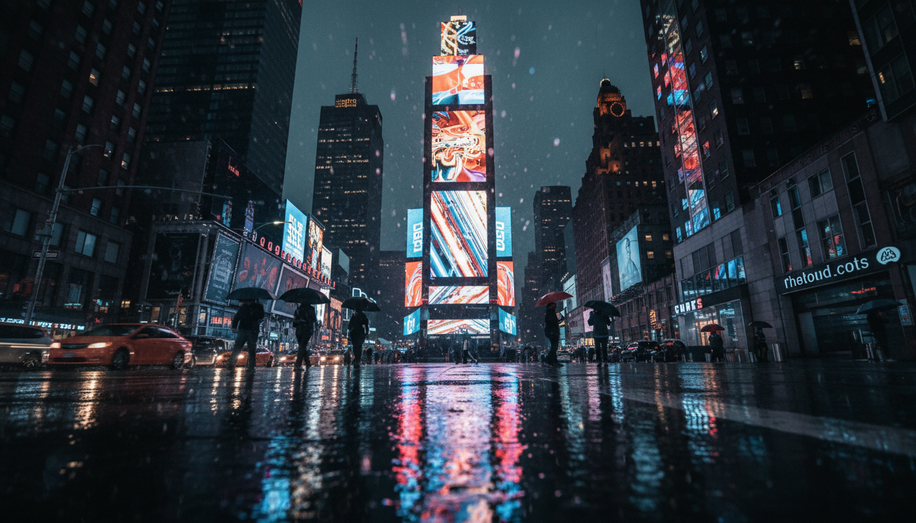

In the relentless pulse of high-density urban centers like New York, Tokyo, or London, where pedestrians swarm sidewalks and vehicles crawl through intersections, out-of-home (OOH) advertising faces its ultimate test: piercing through a visual cacophony to seize fleeting attention spans. Brands must deploy tactics that exploit the chaos rather than succumb to it, transforming crowded streets into canvases for unforgettable impact. Success hinges on bold scale, strategic intimacy, and seamless integration with the city’s rhythm, ensuring ads don’t just compete for eyes—they command them.
Location remains the unyielding foundation of any effective OOH strategy in metropolitan mayhem. High-traffic zones such as major intersections, transit hubs, and commercial districts deliver unmatched exposure, where thousands of potential viewers pass daily without the option to scroll away. Unlike digital ads that users can dismiss, OOH placements guarantee unavoidable encounters, capitalizing on commuters stuck at traffic lights or throngs navigating busy avenues. Pearl Media emphasizes that prime real estate near retail centers or entertainment venues strikes at the moment of purchase intent, embedding brands into consumers’ decision-making flow. Yet, in big cities, a single billboard risks dilution amid the noise; experts advocate clustering multiple units across a neighborhood or layering with complementary channels like social media to build frequency without fatigue, accelerating recall through repetition.
Scale asserts dominance where subtlety falters. Large-format spectacles—think towering building wraps, wallscapes, or supersized digital displays—overwhelm the skyline, creating landmarks that spark social buzz and linger in memory. These massive installations turn urban architecture into brand statements, their sheer presence halting the gaze amid skyscraper clutter. In dense environments, such dominance proves essential: a lone billboard may vanish into the ether, but a city-draping campaign generates shares and conversations, amplifying reach exponentially. Complementing this grandeur, street-level billboards at eye height forge intimate connections with pedestrians and drivers alike, thriving in pedestrian-heavy districts where high-mounted signs might escape notice.
Street furniture emerges as a masterstroke for blending power with unobtrusiveness, turning everyday urban fixtures into attention magnets. Bus shelters, benches, lamp posts, and even repurposed phone booths integrate ads at human scale, targeting captive audiences during pauses—commuters waiting for buses or shoppers resting on benches near high streets. These placements feel organic to the cityscape, less intrusive than looming billboards, yet highly effective in foot-traffic corridors like shopping malls or lively squares. Adintime highlights ground-mounted totems and columns in city centers for their durability and weather resistance, anchoring long-term visibility that builds credibility and local resonance without demanding constant upkeep. In pedestrian-saturated zones, this tactic captures dwell time, allowing messages to sink in as people linger, far outperforming fleeting drive-by exposures.
Transit advertising elevates mobility into opportunity, converting buses, trains, subways, and stations into rolling narratives that shadow urbanites through their day. In densely populated metros reliant on public transport, these ads rack up impressions during commutes, where riders encounter thousands of visuals but dwell long enough for engagement. Innovations like full-bus wraps or platform posters ensure consistent touchpoints, reinforcing recall from morning rush to evening return. B Media Group notes this as ideal for opportunistic strikes in packed cities, where exposure scales with population density. To maximize punch, pair static designs with dynamic digital screens that refresh content, adapting to time of day or audience flow.
Beyond placement, creative execution demands simplicity and sensory provocation to cut through sensory overload. Bold visuals reign supreme: large typography, high-contrast colors, and minimal text ensure readability from afar or in motion, distilling messages to seven words or fewer for instant comprehension. Movement captivates—LED animations, 3D projections, or even interactive elements like touch-responsive displays draw eyes in static crowds. Experiential twists, such as reimagining vacant storefronts as immersive brand pop-ups, fuse advertising with urban vitality, inviting participation over passive viewing. True Impact Media urges competitive audits to differentiate: study rivals’ graphics and messaging, then amplify with hyper-local relevance, like tying into neighborhood events or cultural vibes.
Long-term commitment amplifies these tactics, shifting from one-off blasts to sustained presence that etches brands into the urban subconscious. Campaigns spanning months on durable formats like totems or transit wraps foster familiarity, turning passive exposure into active preference. Data-driven refinements—tracking footfall via sensors or face-recognition tech for demographic targeting—fine-tune placements in real time, as trialed in cities like London. Yet challenges persist: chaotic streets demand resilience against weather and clutter, while regulatory shifts in public-private ad partnerships reshape available spaces.
Ultimately, winning attention in high-density arenas requires a multifaceted assault—prime locations fortified by audacious creativity and omnichannel synergy. As urban populations swell and commutes intensify, OOH evolves from mere signage to integral urban experiences, proving that in the battle for eyes, the boldest, most contextually cunning strategies prevail. Brands ignoring this arena forfeit the daily dialogues shaping consumer minds.