
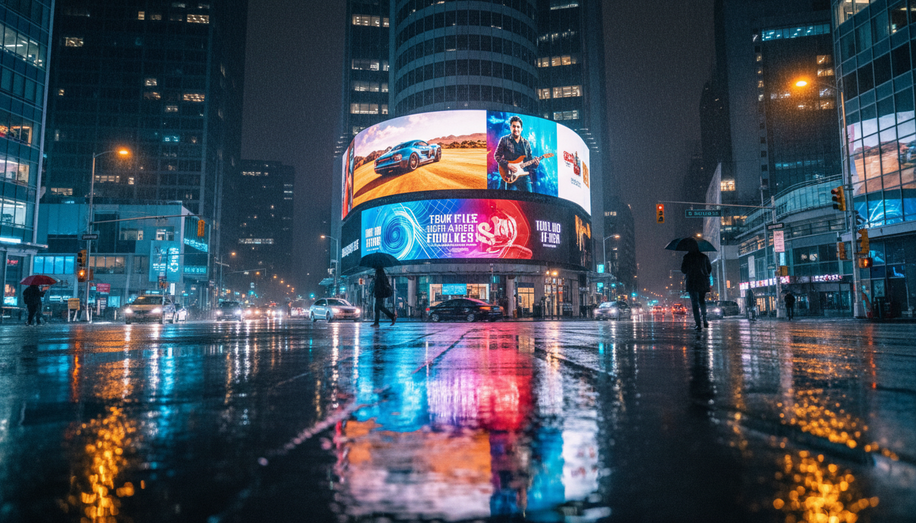

In the bustling streets of 2026, out-of-home (OOH) advertising has transcended its roots as static billboards, emerging as a dynamic ecosystem powered by Internet of Things (IoT) devices and smart technologies that deliver unprecedented precision and engagement. Digital out-of-home (DOOH) screens, once mere digitized posters, now function as intelligent nodes in a vast network, harnessing real-time data from sensors, weather APIs, and mobile ecosystems to tailor messages with hyper-relevance. This fusion of IoT connectivity and artificial intelligence (AI) is not just enhancing visibility; it is redefining effectiveness by bridging the physical world with digital accountability, driving measurable returns on investment for brands.
At the heart of this revolution lies programmatic DOOH, where IoT-enabled screens respond instantaneously to contextual triggers. Imagine a coffee brand’s advertisement morphing from a steaming latte on a chilly morning to an iced refreshment amid summer heat, or pivoting to traffic updates with nearby restaurant promotions during rush hour—all orchestrated by embedded sensors and data streams. Ankit Rastogi, founder and CEO of Ambient DOOH Media, emphasizes that this shift moves beyond “digitizing billboards” to create “smart, flexible, and accountable” media, fueled by AI and deep data integration for massive scale and digital-level precision. In India, for instance, innovations like user-generated content screens and score-based triggers have accelerated this adoption, with large-format DOOH in metros commanding higher share of voice from big spenders.
IoT’s role amplifies through seamless integration with mobile devices, enabling cross-device mapping and retargeting that tracks audience movement without invading privacy. Smart systems analyze footfall patterns, dwell times, demographics, and even cultural cues, allowing creatives to adapt in real time—such as displaying event-specific promotions during festivals or weather-responsive offers. This data-led approach transforms OOH from a reach-first medium into a contextually intelligent layer, as one industry expert describes it: an “operating system of real-world consumer engagement” that powers commerce and creativity in physical spaces. Programmatic platforms deploy these dynamic assets across citywide networks, synchronizing with audience data for sharper targeting and flexible buying, which experts predict will dominate planning by 2026.
Visual innovation takes this further with IoT-driven holographic 3D displays and anamorphic billboards that create immersive optical illusions, captivating passersby and sparking viral social shares on platforms like TikTok and Instagram. Brands such as McDonald’s, Maybelline, and Nike have already leveraged these for “stop-and-stare” moments at high-traffic spots like airports and EV charging stations, where sensor-based tech enables gesture controls, proximity interactions, and NFC taps for direct consumer action. Programmatic DOOH accelerates deployment, making 3D content responsive to real-world variables like events or weather, while costs plummet to enable mainstream adoption in sports venues and urban hubs. This interactivity turns passive viewing into active participation, with motion-responsive walls and digital corridors fostering deeper connections and measurable lifts in awareness.
Sustainability, another pillar enhanced by smart tech, aligns these advancements with global green mandates. Energy-efficient LEDs, OLED screens, and solar-powered signage—monitored via IoT for optimal performance—slash emissions by eliminating printing and transport needs, while AI tools track carbon footprints for transparent reporting. European markets lead with rigorous standards, followed by U.S. metros integrating recycled materials and hybrid formats at EV stations, where geotargeted ads reach high-intent consumers during “me time.” The Outdoor Advertising Association of America notes digital OOH revenue surging at double-digit rates, projected to exceed 40% of total spend, driven by AI-powered placement and time-of-day optimization.
Measurement has evolved dramatically, with IoT facilitating advanced footfall studies, mobile exposure modeling, and attribution metrics that quantify impact across channels. No longer relegated to impressions, OOH now delivers ROI through verified outcomes like increased store visits or sales, empowering agencies with automation and transparency. As offline buying persists, technology enhances rather than disrupts, enabling day-parting, API integrations, and audience movement analysis for optimized campaigns.
Looking ahead, this smart tech infusion positions OOH as a global operating system, blending intention-based planning with frictionless reach amid digital ad fatigue. Revenue growth in both digital and traditional formats signals structural demand, as brands shift budgets to OOH’s reliable presence. From intelligence layers influencing decisions to immersive hubs merging narrative with architecture, IoT and smart innovations are not merely enhancing OOH—they are making it indispensable, proving that in 2026, the most powerful ads are those that know you are there.