
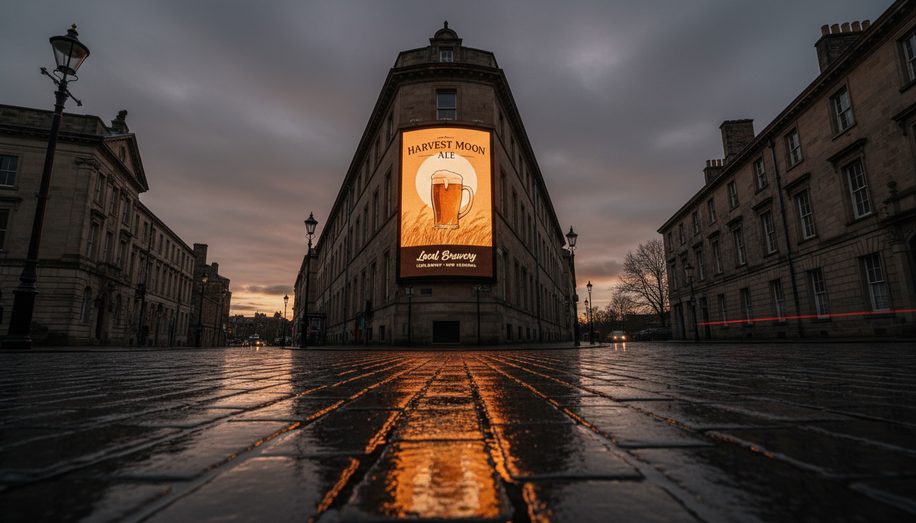

In the bustling heart of a city, where commuters rush past towering billboards and shoppers linger near digital screens in malls, location-based out-of-home (OOH) advertising transforms static displays into dynamic conversations with local audiences. By tailoring messages to the immediate surroundings—whether referencing a nearby landmark, the weather outside, or a neighborhood event—these campaigns capture attention in ways that generic ads never could, driving engagement and conversions through hyper-relevant storytelling.
The foundation of effective location-based OOH lies in technologies like geofencing and geotargeting, which create virtual boundaries around specific areas to deliver contextually precise content. Geofencing, for instance, uses GPS from mobile devices to trigger ads when people enter defined zones, such as around a competitor’s store or a high-traffic retail district. This allows digital OOH (DOOH) screens to dynamically update with promotions tied to real-time factors like time of day or local events, boosting brain response by over 32% compared to non-relevant ads, according to neuroscientific studies. Retailers have seen sales lift by 16% with such contextually tuned campaigns, far surpassing the 9% gain from standard DOOH, while 56% of exposed customers reported making a purchase based on the screen’s content.
Strategic placement amplifies this precision. Billboards near commuter-heavy routes might tout morning coffee specials for a local café, invoking the exhaustion of the daily grind with a tagline like “Fuel up before the bridge—two blocks ahead.” In shopping malls, where consumers are already in a buying mindset, place-based OOH thrives: screens can highlight flash sales on nearby stores, influencing 72% of shoppers to consider purchases, per UK research. High-ROI spots—urban business districts, transit hubs, or stadium vicinities—combine maximum exposure with relevance, as brands evaluate foot traffic data to pinpoint trade areas.
Real-world examples illustrate the power of this approach. A pizza delivery service in London leveraged a DOOH billboard near Soho with the message “Get the best pizza in Soho tonight!”—directly naming the district to forge an instant local bond, spiking engagement through sheer familiarity. Sports stadium ads take it further: one near a major venue read “Celebrate the game with a cold drink—just down the road,” channeling post-game euphoria into foot traffic for nearby bars. In retail settings, Vistar Media’s partnership with Foursquare enabled a brand to measure how DOOH near stores drove incremental visits, while networks like Clear Channel track similar lifts, proving OOH’s role in guiding purchase journeys from awareness to action.
Contextual messaging is the secret sauce, weaving in local culture, events, or landmarks to resonate deeply. Ads placed near high-traffic areas that nod to community specifics—think a billboard by a beach promoting sunscreen during summer or one outside a theater teasing pre-show snacks—enhance recall and relevance. Nearly 90% of digital marketers now incorporate location data, with geofencing yielding click-through rates of 4.39%, a stark improvement over the 0.7% for standard displays, and conversion boosts up to 30%. Moreover, 59% of customers say DOOH improves their shopping experience, underscoring how thoughtful localization turns passive viewers into active participants.
Yet success demands more than tech; it requires integration across channels. Pairing OOH with mobile retargeting—sending follow-up offers to phones that entered a geofence—creates seamless experiences, lifting conversions by 65% when combined with social amplification and landing pages. Privacy remains paramount: with 42% of mobile users opting into location sharing, ethical data use builds trust, avoiding the pitfalls of inaccuracies that could dilute impact.
Emerging advancements like 5G, AI, and ambient intelligence promise even sharper execution. AI can predict visits based on past behavior, dynamically adjusting screen content for personalized promotions, while sensors fine-tune ads to crowd density or weather. Programmatic DOOH evolves this further, enabling real-time bidding for spots that align perfectly with audience movement.
Ultimately, crafting engaging location-based OOH campaigns means viewing public spaces as storytelling canvases. By anchoring messages in the “here and now”—the roar of a stadium crowd, the hum of a mall escalator, or the pulse of a city street—brands forge emotional connections that transcend screens. These efforts not only minimize waste and maximize ROI but redefine advertising as a local dialogue, one resonant placement at a time.