
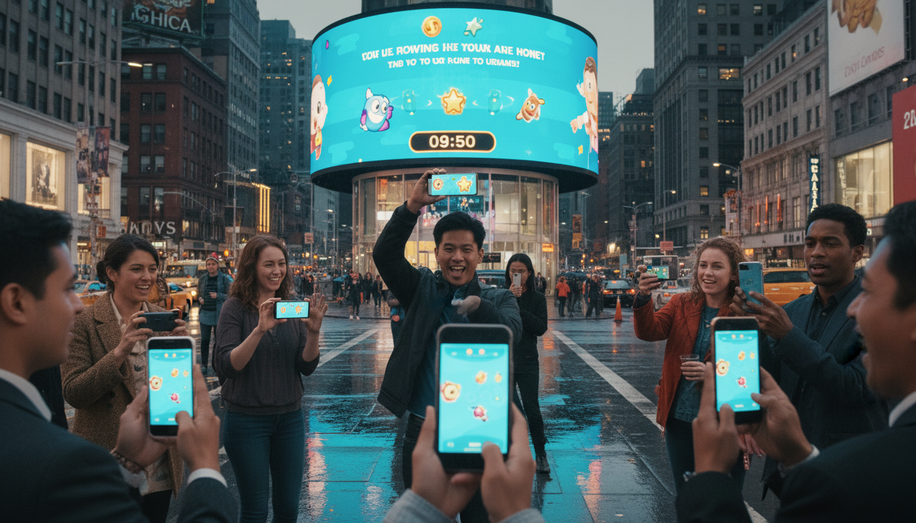

The convergence of outdoor advertising and interactive gaming has demonstrated remarkable potential for transforming how brands connect with audiences in physical spaces. Several recent campaigns illustrate how gamification elements integrated into out-of-home (OOH) advertising can substantially elevate engagement metrics and drive measurable business results.
One of the most compelling examples comes from L’Oréal’s skincare campaign, which partnered with Futuretech to develop “MelaMatch,” an interactive game that reimagined product education. Rather than relying on traditional scientific messaging, the campaign transformed complex dermatological information into an engaging digital experience through quizzes and challenges. The results proved transformative: the campaign achieved a 60% engagement rate among 736,000 unique users, with participants experiencing a 45% brand lift and 28% increase in purchase consideration. Equally impressive was the 20% market share increase, demonstrating that gamified OOH experiences can drive tangible commercial outcomes. The campaign’s success stemmed partly from its seamless integration between the gaming experience and e-commerce functionality, creating a frictionless path from interaction to purchase.
Ally Bank’s augmented reality monopoly campaign offers another instructive case study in combining OOH advertising with gaming mechanics. The campaign invited consumers to scan outdoor promotional materials with their smartphones, which triggered AR animations featuring Mr. Monopoly awarding points and cash prizes. The mechanics were simple but effective: players who collected squares and completed the initial game element were incentivized to find additional Monopoly pieces, transforming a single interaction into an extended engagement journey. The campaign generated 100,000 plays within just one week across six cities, with 86% of players completing the full game sequence. Perhaps most valuably, the interactive nature of the experience enabled Ally to capture email addresses for subsequent marketing efforts, demonstrating how gamification can serve dual purposes of entertainment and data collection.
McDonald’s Monopoly campaign represents one of the longest-running examples of successful OOH gamification, illustrating the durability of well-executed interactive promotions. By transforming every purchase into a game opportunity, McDonald’s created a mechanism that encouraged repeat visits and impulse buying. The program proved so effective that in 2010 alone, McDonald’s increased U.S. sales by 5.6%, with many customers returning specifically to participate in the game experience. The campaign’s success reveals an important principle: when gamification is deeply integrated into the customer journey rather than appearing as a superficial addition, it can drive sustained behavioral change.
Magnum’s Pleasure Hunt campaign exemplifies how brand-specific online gaming can extend the reach of physical advertising. The chocolate company created a digital experience reminiscent of classic video games but integrated across multiple websites and scenarios. Players accumulated points by collecting virtual bon bons that ultimately converted into discounts or rewards for the actual Magnum product. The campaign achieved significant awareness through social media amplification, with Magnum Pleasure Hunt becoming the most tweeted URL globally on one particular day. This success demonstrates how OOH campaigns can seed awareness that expands virally when gamification elements prove sufficiently entertaining.
These case studies reveal consistent patterns in what makes gamified OOH campaigns successful. First, the gaming mechanics must be intuitive and quick to learn, respecting that outdoor audiences have limited attention spans. Second, successful campaigns establish clear reward structures that incentivize participation and repeat engagement. Third, integrating data collection capabilities into the experience provides marketers with valuable audience insights while maintaining the entertainment value. Finally, campaigns that bridge physical and digital experiences—whether through QR codes, AR activation, or e-commerce integration—tend to generate superior engagement rates compared to purely analog approaches.
The evidence indicates that gamification has evolved from marketing novelty to proven methodology for enhancing OOH effectiveness. As consumer expectations for interactive experiences continue rising, brands that strategically incorporate gaming elements into outdoor advertising campaigns gain significant competitive advantages in capturing attention, fostering participation, and ultimately driving measurable business results.