
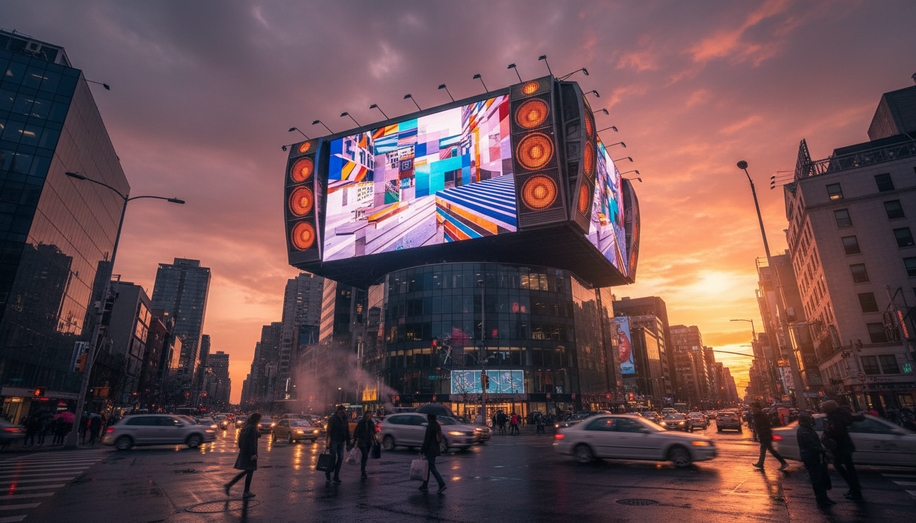

The integration of audio into out-of-home advertising represents a fundamental shift in how brands connect with audiences in physical spaces, moving beyond the visual dominance that has defined the medium for decades. As urban environments become increasingly smart and interconnected, sound has emerged as a powerful tool for creating immersive experiences that capture attention and drive engagement in ways static imagery alone cannot achieve.
Voice-activated outdoor advertising stands at the forefront of this audio revolution. In sophisticated urban markets like Dubai, transit environments including bus shelters, taxi advertising, and high-dwell-time locations are becoming platforms for interactive voice experiences. These voice-enabled screens allow consumers to request detailed information conversationally, fundamentally transforming how brands deliver complex messaging. Real estate companies can now respond to specific inquiries about neighborhood properties and pricing through voice interfaces, while automotive advertisers answer detailed questions about fuel efficiency and safety ratings without relying on traditional static billboard constraints.
The sophistication of voice technology extends beyond simple information retrieval. Voice-activated outdoor screens integrate with smart home ecosystems including Amazon Alexa and Google Home, creating seamless connections between momentary outdoor exposures and sustained consumer action. When a consumer hears an audio advertisement and commands the screen to “send this offer to my phone,” they establish a persistent link between the outdoor moment and their personal devices. This capability fundamentally changes measurement and attribution, allowing marketers to track how outdoor audio experiences translate into subsequent mobile searches, website visits, and purchases.
Multilingual capability represents another critical dimension of audio integration in diverse markets. Dubai’s multicultural environment, where Arabic, English, Hindi, Urdu, and Filipino languages are commonly spoken, demonstrates how audio formats address accessibility challenges that visual-only campaigns cannot solve. Voice technology naturally supports multiple languages, ensuring that brands reach broader audiences and demonstrate genuine inclusivity through their advertising approach.
The broader advertising industry recognizes audio’s growing prominence. Recent forecasts indicate that audio continues its steady evolution with programmatic audio and voice-activated advertising technologies keeping the medium relevant, particularly within finance and healthcare sectors. These emerging technologies represent more than novelty—they address fundamental consumer preferences for personalized, contextually relevant messaging that extends naturally from smart devices into physical environments.
Audio integration within outdoor advertising contributes to the measurable increase in dwell time that interactive formats generate. Industry data demonstrates that interactive advertising formats can increase dwell time by 20 to 40 percent, fundamentally improving the conditions under which audio messaging takes hold. When consumers actively engage with voice interfaces, they remain in proximity to advertising for extended periods, creating deeper brand exposure and stronger recall potential than passive viewing scenarios.
The convergence of audio with digital out-of-home advertising reflects broader technological trends reshaping urban spaces. As cities integrate IoT-connected screens and real-time data feeds into their infrastructure, audio becomes a natural component of intelligent automation systems that deliver timely messages based on traffic flow, local events, and audience demographics. Smart city integration enables outdoor advertising systems to adapt audio content dynamically, matching messaging to contextual conditions rather than broadcasting static content indiscriminately.
Looking forward, the implications for engagement and brand strategy are substantial. Brands that integrate audio thoughtfully into outdoor campaigns position themselves to capture attention in increasingly crowded media environments while demonstrating responsiveness to consumer preferences for interactive, personalized experiences. The rise of audio OOH advertising signals that the most effective outdoor campaigns will engage multiple senses simultaneously, creating memorable moments that extend well beyond the initial outdoor exposure through connected digital ecosystems. As voice technology matures and smart city infrastructure continues expanding, audio will likely become as fundamental to outdoor advertising as visual elements themselves.