
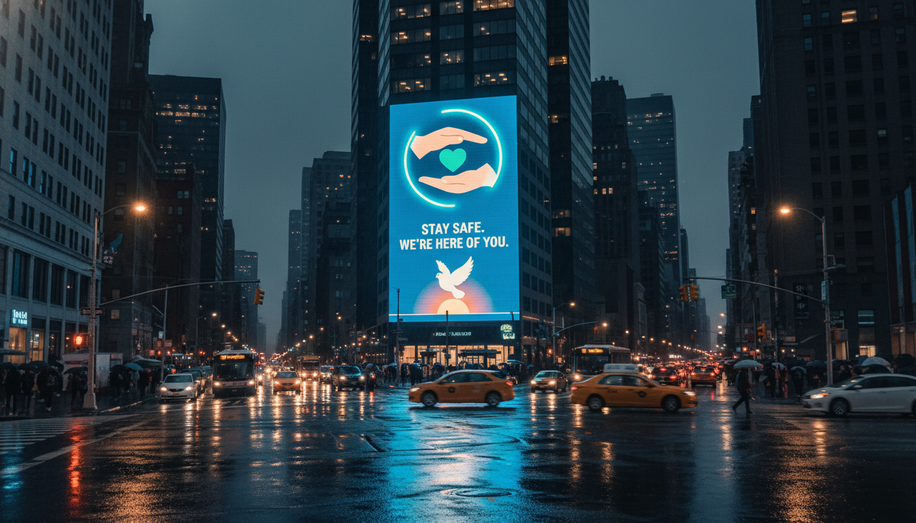

In the throes of a global pandemic or a sudden supply chain meltdown, brands face a deluge of uncertainty that can erode trust overnight. Out-of-home (OOH) advertising, with its unmissable presence on billboards, transit hubs, and urban screens, emerges as a powerful tool for crisis communication, delivering immediate, visually compelling messages to mass audiences when digital channels alone fall short. Unlike fleeting social media posts, OOH cuts through the noise, reaching people in their daily routines—commuting, walking, or simply navigating public spaces—where emotional resonance can rebuild confidence swiftly.
Consider the anatomy of effective crisis response through OOH. Preparation is paramount: brands must preempt risks by assembling a dedicated crisis team, complete with designated spokespersons and pre-drafted holding statements tailored for high-visibility formats. This groundwork ensures that when calamity strikes, OOH campaigns can launch without delay. Real-time monitoring tools track public sentiment across media and social platforms, allowing advertisers to pivot messaging dynamically—perhaps shifting from reassurance to action steps as a situation evolves. For instance, during a product recall, a billboard network could blanket affected regions with clear directives: “Safety First: Full Recall Underway—Visit [website] for Details,” paired with a QR code for instant updates, minimizing panic and demonstrating accountability.
Transparency forms the bedrock of these efforts. Audiences crave honesty amid chaos, and OOH excels at conveying it unfiltered. A thoughtful first public statement—transparent, apologetic where warranted, and outlining concrete next steps—should dominate prime OOH real estate. Airlines grounded by volcanic ash or weather events have historically used airport digital screens and roadside banners to apologize directly: “We Regret the Delays—Here’s Our Recovery Plan,” fostering empathy and outlining timelines for resolutions. This approach not only shapes the narrative but also prevents misinformation from filling the void, as consistent messaging across OOH assets reinforces unity and control.
The medium’s ubiquity amplifies reach during uncertainty. In outdoor hospitality crises, like the 2016 Hurricane Matthew disruptions, businesses that flooded social feeds with updates found them amplified when synced with physical signage at resorts and highways: “We’re Safe and Reopening Soon—Your Trust Matters.” OOH bridges the gap between online buzz and real-world reassurance, engaging passersby who might ignore screens at home. Experiential elements heighten impact; interactive digital OOH, such as touchless displays showing live safety protocols or customer testimonials, invites participation without risk, turning passive viewers into active believers.
Yet success hinges on customer-centricity. Crises demand empathy over salesmanship—focus on safety, accountability, and community. A fast-food chain facing contamination fears might deploy transit ads proclaiming, “Your Health is Our Priority: Enhanced Protocols in Place,” with visuals of rigorous testing labs to evoke security. Swiftness is key; the first hour post-crisis sets the tone, so partnerships with OOH networks enable rapid deployments, often within hours via programmatic buying that targets high-traffic zones dynamically. Internal collaboration across PR, legal, and creative teams ensures messaging aligns, avoiding contradictions that could undermine credibility.
Storytelling elevates OOH from mere announcement to emotional anchor. Purpose-driven narratives—user-generated recovery tales or behind-the-scenes resilience footage—forge connections on static displays. During economic downturns, retailers have blanketed cityscapes with “Together We’re Stronger” campaigns, featuring diverse locals sharing hope, blending brand voice with collective spirit to sustain loyalty. Cross-cultural sensitivity, informed by sentiment analysis, tailors these for diverse audiences, enhancing resonance in multicultural hubs.
Post-crisis, OOH sustains momentum. Remediation phases benefit from follow-up waves: “Thank You for Your Patience—We’re Back Stronger,” monitoring feedback to refine operations. Long-term planning incorporates lessons, like scenario drills testing OOH integrations, building resilience. Data from past events underscores ROI; transparent OOH responses correlate with faster reputation recovery and loyalty rebounds, as seen in hospitality recoveries where proactive signage reduced guest confusion and bolstered reviews.
Challenges persist—overexposure risks desensitization, and regulatory hurdles in sensitive zones demand agility. Still, OOH’s tactile immediacy positions it as indispensable. In an era of hybrid threats, from cyberattacks to climate shocks, brands leveraging it thoughtfully don’t just communicate; they command trust amid turmoil. By prioritizing speed, sincerity, and scale, OOH transforms crises into opportunities for deepened allegiance, proving that in uncertainty, visibility is not just seen—it’s felt.