
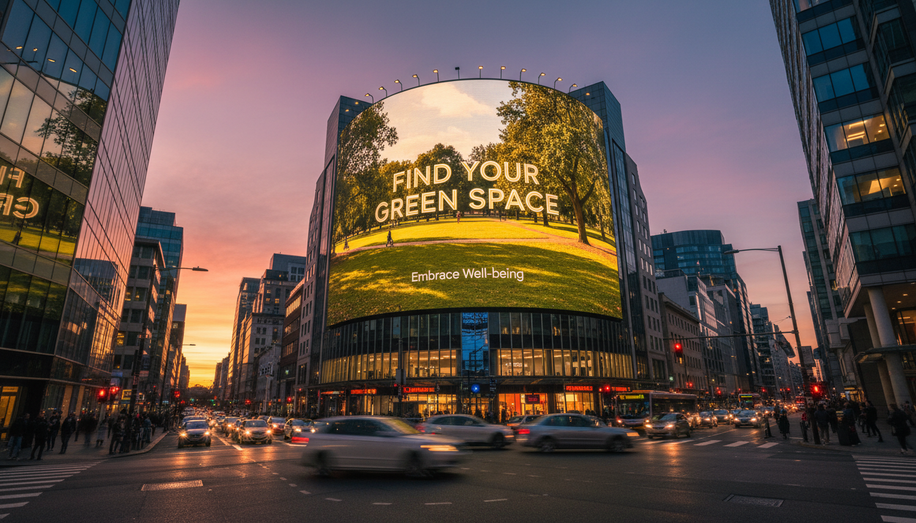

The COVID-19 pandemic delivered a seismic shock to out-of-home (OOH) advertising, forcing the industry to confront empty streets, shuttered transit hubs, and a sudden plunge in foot traffic that slashed ad impressions and revenue. As restrictions lifted and consumers tentatively re-emerged into public spaces, OOH strategies evolved dramatically, prioritizing digital innovation, flexibility, and messaging attuned to heightened health anxieties and shifting behaviors. Today, in a post-pandemic world, the sector stands more resilient, data-savvy, and consumer-centric than ever, with advertisers channeling campaigns toward health-conscious narratives that resonate in an era of lingering caution.
During the height of lockdowns, OOH faced existential challenges. Social distancing measures drastically reduced visibility, as commuters vanished and public gatherings evaporated, leading to sharp drops in pricing—sometimes by double digits—for billboards, transit ads, and high-traffic displays. Brands pivoted urgently, reallocating budgets to digital platforms and focusing on proximal locations like grocery stores and pharmacies, where essential errands kept some movement alive. This period exposed vulnerabilities in rigid, long-term contracts, prompting a rethink of how OOH could deliver value amid uncertainty. Yet, as vaccines rolled out and mobility rebounded, the industry staged a robust recovery. By 2023, digital OOH spending surged 19.2% to $17.6 billion, comprising over a quarter of total outlay, fueled by screens in revitalized urban centers, airports, and malls.
The rise of digital out-of-home (DOOH) advertising emerged as the pandemic’s most enduring legacy, transforming static billboards into dynamic canvases capable of real-time updates. Unlike traditional formats, DOOH allows advertisers to swap messaging in minutes—tailoring content to weather, events, or breaking news—making it ideal for a volatile post-COVID landscape. Airports and transit hubs, once premium but underutilized, saw rates climb 10-15% by 2024-2025 amid travel booms, with digital screens commanding even higher premiums for their interactivity. This shift wasn’t merely technological; it reflected deeper changes in consumer habits. People now crave brands that demonstrate empathy, prioritizing those emphasizing safety, wellness, and community resilience in their visuals and copy. Health-conscious messaging proliferated: campaigns highlighting hygiene products, mental health support, or contactless services became staples, blending reassurance with promotion to rebuild trust.
Flexibility became another cornerstone of reinvigorated OOH strategies. Advertisers, scarred by abrupt lockdowns, demanded short-term deals and dynamic pricing models tied to actual performance rather than fixed locations. Providers responded with contracts allowing pauses or pivots, often leveraging AI and near-field communication for granular analytics on viewer traffic and engagement. This data-driven approach ensures costs align with impressions, appealing to brands wary of overcommitting in an unpredictable world. Premium spots in high-traffic zones—downtown areas, event venues—now fetch top dollar, as marketers chase the masses flocking back to live experiences. Hybrid models further amplified adaptability, merging DOOH’s agility with traditional OOH’s broad reach to create seamless, multi-touchpoint campaigns that complement digital and broadcast efforts.
Sustainability and health-aware innovation are weaving into this fabric, signaling OOH’s maturation. Eco-friendly solutions, such as solar-powered billboards and recycled materials, gain traction as consumers favor environmentally responsible brands—a sentiment amplified by pandemic-era reflections on vulnerability and stewardship. Messaging strategies have grown more nuanced, too. Post-COVID ads often foreground wellness: think vivid displays promoting immune-boosting foods, virtual fitness challenges, or sanitized travel options, all designed to align with audiences’ elevated health vigilance. Programmatic buying and audience measurement tools, accelerated by the crisis, enable precise targeting, ensuring health-focused creatives hit the right demographics at optimal times.
Looking ahead, OOH’s future gleams with promise. The integration of emerging tech—like anamorphic 3D billboards and AI-powered personalization—positions it as a priming medium that captures attention without intrusion, outperforming other channels in recall. As hybrid work stabilizes and leisure travel surges, advertisers are poised to invest heavily in DOOH networks that deliver measurable, empathetic impact. Pricing dynamics have stabilized at elevated levels for prime inventory, underscoring demand, while flexible, tech-enabled models democratize access for smaller players. Ultimately, the pandemic didn’t just disrupt OOH; it refined it into a smarter, more responsive force. By embracing health-conscious storytelling amid digital evolution, the industry is not merely recovering—it’s redefining public engagement for a world forever altered.