
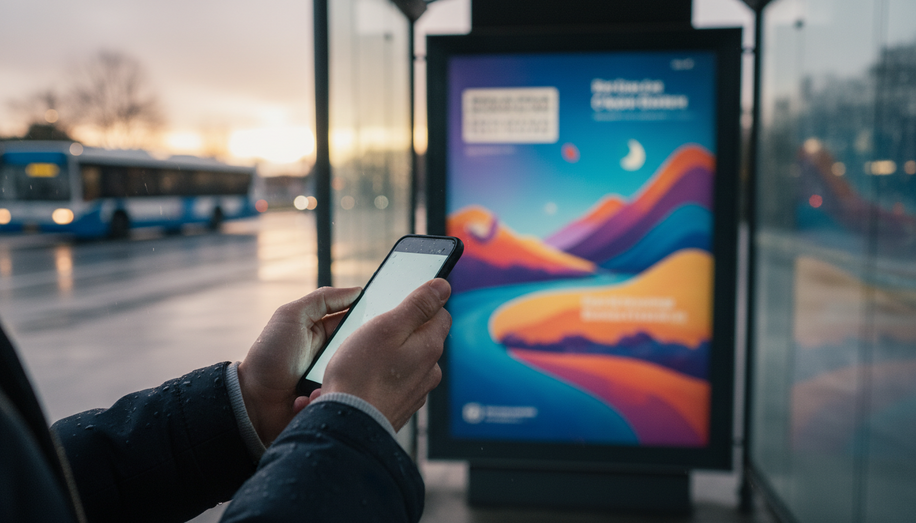

In a world where smartphones dictate daily rhythms, out-of-home (OOH) advertising is undergoing a profound evolution, compelled to harmonize with mobile technology rather than compete against it. Consumers now navigate urban landscapes with devices in hand, their attention split between physical surroundings and digital screens, prompting advertisers to rethink OOH strategies that once relied on static billboards for passive exposure. This mobile-first paradigm has transformed consumer behavior: people check their phones an average of 150 times a day, blending real-world movement with instant digital gratification, which demands OOH campaigns that bridge the gap between seeing an ad and taking immediate action.
The impact on consumer habits is stark. Mobile ubiquity has fostered “liquid audiences,” as described by industry observers, where people flow seamlessly between locations, apps, and experiences, making traditional OOH’s broad-reach model feel outdated. Yet, this shift amplifies OOH’s value. Unlike skippable digital ads plagued by saturation and distrust—where 56% of consumers trust outdoor formats more—OOH offers unblockable, tangible presence in high-traffic zones like transit hubs, malls, and roadways. In 2026, with digital channels faltering under privacy regulations and algorithmic fatigue, OOH spending surges, propelled by digital out-of-home (DOOH) formats that now claim 45.2% of budgets by projections into 2028, up from 22% in 2016. Advertisers are ditching fragmented online ecosystems for OOH’s predictable geographic reach, achieving superior brand recall without opaque targeting.
Mobile technology supercharges this resurgence through precision tools once exclusive to digital realms. Programmatic DOOH enables real-time buying akin to Google Ads, allowing location-based geo-fencing and proximity data to deliver hyper-relevant messages—think dynamic screens near stores flashing promotions as shoppers pass by. High-resolution LED billboards sync with live events, trigger motion-sensor animations, or deploy anamorphic illusions that invite augmented reality interactions via smartphones. This fusion turns passive glances into active engagements: 74% of mobile users act after DOOH exposure, visiting websites, scanning QR codes, or searching brands, often leading to 127% lifts in store visitations when paired with retargeting.
Consider the synergy in action. A commuter spots a DOOH ad on a subway platform promoting a nearby coffee chain; a QR code or NFC tap unlocks a mobile coupon, while geo-triggered mobile retargeting reinforces the message later. This cross-channel integration positions OOH as the “amplification engine” of omnichannel strategies, enhancing digital performance rather than rivaling it. Hashtags and branded search terms on billboards drive social buzz and traffic spikes, with attribution tools now tracking foot traffic, app downloads, and purchases via location data—making OOH as measurable as any app campaign. Mobile billboards on trucks extend this mobility, swarming events or neighborhoods for immersive takeovers, outperforming static formats in dynamic urban flows.
Yet, rethinking OOH demands more than tech overlays; it requires behavioral attunement. In a mobile-first era, consumers crave authenticity amid ad fatigue, shunning intrusive digital tracking for OOH’s non-creepy contextuality—55% find it relevant without intrusion. Strategies now prioritize purpose-driven narratives: outdoor brands at trailheads or events foster loyalty through shared cultural moments, extending organically to mobile shares. Sustainability adds another layer, with DOOH’s digital delivery slashing print waste via solar-powered screens and AI energy management, appealing to eco-conscious mobile natives who value green credentials.
Challenges persist, however. Fragmented data privacy and AI disruptions in search demand agile adaptations, but OOH’s independence from algorithms provides resilience. Smaller budgets benefit from programmatic access, democratizing precision targeting across venues from elevators to waterways. As 2026 unfolds, forecasts paint OOH as a “global operating system,” leveraging smart systems for carbon-aware planning and liquid audience flows.
Ultimately, mobile’s dominance doesn’t diminish OOH—it redefines it as a vital complement. Brands scaling hybrid campaigns see premium lifts of 88% in awareness, reclaiming attention in fractured media landscapes. By embedding mobile bridges like QR integrations and retargeting, OOH evolves from billboard relic to indispensable force, ensuring messages not only capture eyes in motion but propel fingers to screens, closing the loop from awareness to action in real time.
To truly operationalize OOH as an amplification engine, Blindspot offers the critical tools required to bridge this mobile-first gap. Its programmatic DOOH campaign management, combined with precise location intelligence and ROI measurement, allows brands to track the seamless journey from OOH exposure to immediate mobile action and measurable business outcomes. https://seeblindspot.com/