
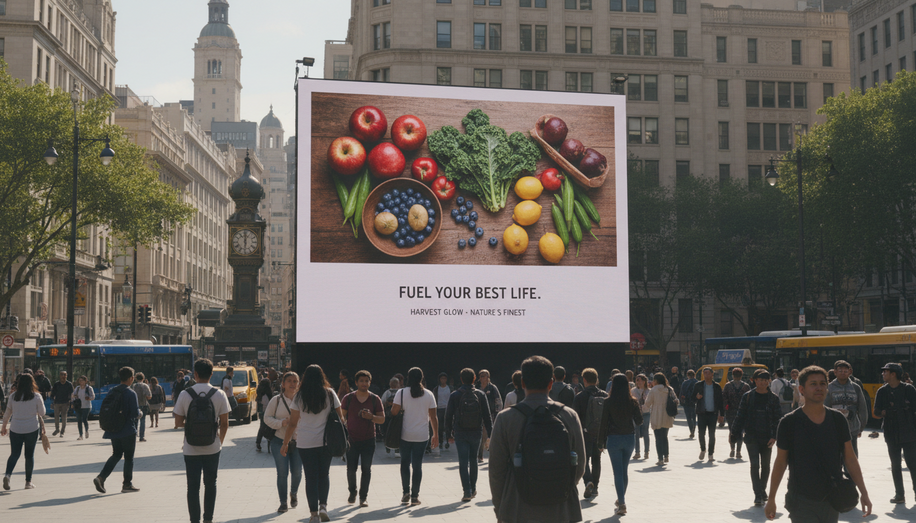

In an era where public health challenges like obesity, mental wellness, and preventable diseases dominate headlines, brands are increasingly weaving health messaging into their out-of-home (OOH) campaigns to foster trust and drive consumer loyalty. Out-of-home advertising, with its massive reach and contextual punch, offers a unique canvas for brands to align their identities with proactive health narratives, turning billboards, transit wraps, and digital screens into catalysts for behavioral change. This integration not only amplifies brand recall but also positions companies as societal contributors, as seen in campaigns from Dove to CVS Health that blend commercial appeal with empathy-driven health calls.
The power of OOH lies in its unmissable presence—billboards seen by millions, bus wraps navigating high-traffic routes, and posters in supermarkets or gyms that hit audiences at decision-making moments. Research underscores this: neuroscientists note that contextually relevant OOH stimuli can boost brain response by up to 18%, making messages stickier when placed near hospitals for vaccination drives or parks for fitness promotions. Repetition across formats reinforces impact; consistent slogans, colors, and imagery on billboards, transit ads, and wild postings create a unified drumbeat that leverages social proof—showing community participation to nudge individual action. For brands, this means health messaging isn’t an add-on but a strategic layer that enhances visibility without diluting core product pitches.
Consider the Melanoma Fund campaign, a stark OOH effort partnered with Bauer Media Outdoor. Evocative images linked cycling without sun protection to cancerous melanomas, delivering immediate, actionable reminders: spot the signs, protect your skin. This approach exemplifies emotional urgency through visuals, a tactic brands can adapt—pairing product imagery with health facts, like a beverage company showing hydration benefits amid workout visuals near gyms. Similarly, Dove’s “Courage is Beautiful” celebrated frontline workers during COVID-19, promoting healthy body image while tying into the brand’s wellness ethos. CVS Health quit-smoking ads contrasted labored breathing with the freedom of full lungs, announcing corporate commitments to cessation support and cementing their health-forward reputation.
Hospital and healthcare providers have long mastered OOH for branding and awareness, offering blueprints for consumer brands. Northwestern Medicine’s bus wraps in Chicago’s affluent neighborhoods blanket routes with “world-class care” promises, using branded purple hues for instant recognition and touting specialties like cardiology. UChicago Medicine’s wild postings spotlight new locations with clear facades and assurances of “exceptional primary care,” building familiarity so consumers recall the name at need. MedSpring Urgent Care flips the script on somber healthcare imagery, deploying bright colors and “back to what matters” slogans on hotspots to reframe urgent care as quick, positive recovery. Brands can mirror this by humanizing health: a fitness app might show joyful runners on lakefront billboards, implying their tool unlocks such vitality, much like Northwestern’s lifestyle-evoking creatives.
Contextual targeting elevates these efforts. Placing mental health messages at commuter hubs taps environmental cues where stress peaks, while supermarket posters near healthy aisles prompt nutrition choices. Digital OOH (DOOH) adds dynamism, enabling seasonal tweaks like flu shot reminders or wellness month spotlights. The BC Lung Foundation’s billboards paired childhood joys—”hit a home run”—with asthma’s breath-stealing reality, striking an emotional chord without sentimentality. AIDS Healthcare Foundation’s “Testing is Caring” blanketed 34 cities on billboards and benches, destigmatizing STD checks and linking to free clinics. Brands should prioritize such relevance: a snack maker could deploy DOOH near schools warning of sugar’s toll, then pivot to their low-sugar alternative.
Yet success demands balance. Health claims must navigate regulations—substantiated, non-misleading—to avoid backlash, especially in jurisdictions scrutinizing pharma-like messaging. Simplicity rules: OOH’s glance-time brevity favors bold visuals over text walls. Walgreens’ “This is Our Shot” vaccinated celebrities like John Legend to convey hope and community resilience during the pandemic, proving celebrity endorsement boosts relatability. For brands, partnering with health orgs—like Bauer Media’s Melanoma tie-up—lends credibility and extends reach.
Preventive messaging shines brightest, aligning with common OOH goals: awareness of services, education, and reputation-building. A food brand might echo Panadol’s “Not That Pain” by contrasting junk-food headaches with their nutrient-rich relief on transit ads. Local targeting proves cost-effective, hitting communities where patients—or customers—live, work, commute. Bus wraps, as Northwestern exploits, turn vehicles into mobile memoranda in dense urban gaps.
Ultimately, integrating health into OOH transforms brands from sellers to allies in wellness journeys. By harnessing high visibility, repetition, and hyper-local cues, campaigns like these don’t just sell—they inspire action, from melanoma checks to stair-climbing habits. As public scrutiny on corporate responsibility intensifies, savvy brands will lead, proving OOH’s dual role as commerce engine and public good. The result? Loyal consumers who associate products with empowerment, not exploitation.